

Palm trees are unique plants that add a bold, tropical touch to interiors. Many are perfectly adapted to growing indoors. This makes them an ideal way to surround yourself with greenery all year round. Among the palms that reign supreme in our interiors is the chamedora. It is a lovely houseplant with dark green leaves that should also make an appearance in your home!
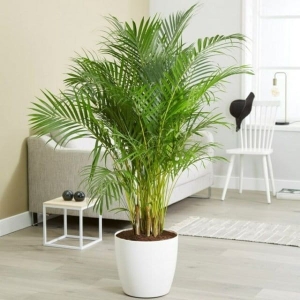
Palma chamedora - characteristics
Chamedora is a small palm native to the tropical forests of Central America. The distinguishing features of these palms are their lush crown of green leaves and slow growth. These plants are valued not only for their ornamental qualities. They have air-purifying and humidifying properties. They are also safe for animals. They look exceptional in tall pots or flowerbeds. The stateliness of the chamedora makes it a very popular choice as a hotel or restaurant plant.
Chamaedorea how to care?
The popularity of the chamedora is hugely influenced by the uncomplicated care of the plant and its hardiness. It is quick to forgive mistakes, which is why it is recommended as a plant for beginners. To enjoy its lush appearance, just a few conditions need to be met:
✔️ position
The Chamedora palm prefers partial shade and does not like direct sun. A good place for the plant will be a room with a window facing north or east.
✔️ temperature
The plant does not like overheating and grows best at room temperature. In winter it is advisable to keep it a little cool (minimum 13°C).
✔️ substrate
The substrate for chamedora should be fertile, permeable and slightly acidic. To prevent root rot, drainage, e.g. in the form of expanded clay, is also advisable.
✔️ watering and fertilising
As befits a tropical plant, the chamedora loves moisture but does not tolerate excess water. So use moderation when watering by keeping the substrate slightly moist. As the plant shuns dry air, regular sprinkling will have spectacular results, while also acting as a preventative measure to prevent spider mite attack. From spring to autumn, give Chamedora a slow-release fertiliser or reach for a specialist fertiliser for palms or green plants.
Chamaedorea elegans - the most popular palm varieties
Chamedora belongs to the areca family (Arecaceae) and includes more than 100 species. Each is distinguished by its thin trunk and characteristic pinnate leaves in a luscious green colour. In Poland, however, the species most commonly cultivated is chamaedorea elegans, known as chamedora exquisita or coral palm. It is a potted plant that grows in attractive clumps, with its bright leaves covering thin stems.
Chamedora vs Areka
The two most common domestic palms, very often confused, are Chamedora and Areka. How do you tell them apart? The main difference is in appearance. Seemingly identical, the leaves of these palms are completely different. Areka has a more slender habit. Its leaves resemble a V, are pinnate, light green and spread upwards. Chamedora leaves, on the other hand, are much denser and feathery from the very bottom. In addition, the chamedora blooms by producing inconspicuous yellow flowers that develop into fruit. The differences between the palms also relate to their target height. Under domestic conditions, the Areka palm can reach about 2 metres in height. The chamedora, on the other hand, grows slowly and is much smaller - growing to around 1 - 1.5 metres.